
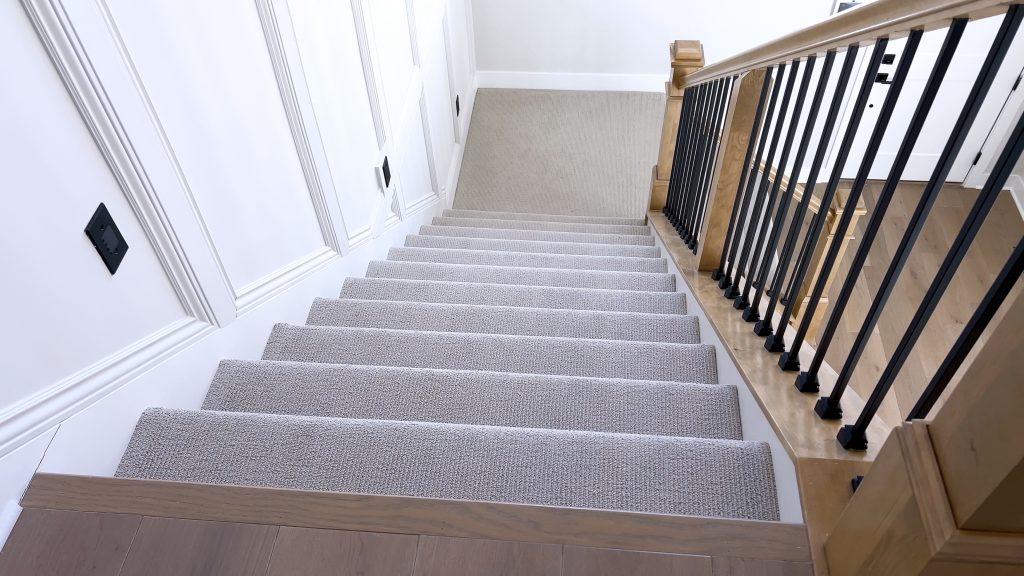
Older homes feel warm and unique, but stairs in these homes often create real daily risk. Most importantly, interior metal railings give you steady support without changing the look and rhythm of the space. Metalex designs each railing detail to fit the stair layout, the wall structure, and the way people move through the home.
Interior metal railings and the detail that prevents most falls
Above all, the safest detail is a continuous handrail that you can hold from the first step to the last step. That is to say, your hand stays on the rail through straight runs, turns, and landings, so you never reach for support and find nothing. Many older staircases break the rail too early, stop it at a newel post, or leave a gap at the landing. Consequently, the moment you need support most, you lose it.
Metalex builds the handrail line to match the path of travel, not just the shape of the staircase. We place the rail where your hand naturally reaches, and we keep the grip consistent across the full run. Interior metal railings work well in old homes because metal allows clean bends and stable transitions without bulky parts.
What “continuous” means in a real staircase
A continuous rail starts before the first riser and ends after the last riser. In other words, you keep support while you step on and off the stairs, which is where many slips happen. A continuous rail also follows the turn, so you do not change grip right when your feet change direction. Moreover, it returns safely at the ends, so clothing and bags do not catch on sharp edges.
When Metalex plans a railing upgrade, we map the exact points where people reach, turn, and pause. After that, we design the rail line to stay useful at every point, not only at the center of the run.
Grip shape matters more than decoration
Many decorative rails look great but feel hard to hold. For example, wide flat tops force your wrist into an awkward angle, and thin edges give your hand very little control. A safer handrail uses a rounded, easy to grip profile that supports kids, adults, and seniors in the same way. Likewise, the rail height stays consistent, so your arm does not rise and drop as you move.
Metalex chooses a profile that fits your hand and suits the home style. We also set the spacing from the wall for comfort, so your fingers wrap naturally without rubbing knuckles on the surface.
Strong anchoring makes the rail trustworthy
A handrail must feel solid when someone leans or pulls during a slip. Therefore, we focus on anchoring points and bracket placement, especially in older plaster and framing. We locate strong backing, we place fasteners where they hold, and we eliminate flex. To clarify, even small movement makes people stop using the rail, so strength protects safety in a simple way.
If you want to see how we plan and build custom work, visit Metalex.
Safer baluster spacing without changing the home’s character
Older guards on landings often leave large openings. As a result, kids and pets can squeeze through, and adults can lose balance near the edge. Metalex improves safety by tightening spacing while keeping the visual lines light. For instance, slim vertical pickets match traditional styles better than thick panels, and they keep the view open.
Interior metal railings also help when the staircase sits beside a drop or an open concept area. We shape the guard to protect that edge while the handrail supports the climb. If you want examples that fit older Toronto interiors, explore interior metal railings in Toronto.
Avoid climb friendly layouts on guards
Safety improves when the guard discourages climbing. In other words, vertical pickets reduce footholds better than wide horizontal elements. Moreover, tighter spacing reduces the chance of a child slipping through. Metalex uses layouts that protect families while keeping a clean, timeless look.
When the stair layout changes, plan rails with the stairs
Some old homes have narrow runs, uneven risers, or awkward turns that feel risky even with a new rail. Consequently, a stair upgrade can solve both comfort and safety at the same time. When a project needs new structure, metal stairs allow a matched design where the rail height, turns, and landings work together from day one.
Metalex builds the stairs and the railing as one system, so the handrail supports each step in the right place. After that, finishing details keep the look consistent through the full space.
Extend the same safety logic to exterior edges
Many older homes have short porch rails, loose posts, and uneven entry steps. Therefore, the first steps into the home can feel more dangerous than the stairs inside. Metalex applies the same continuous grip idea outside so your hand finds support as you approach the door.
If you want to protect boundaries and walkways, metal fences add strength and clear edges without blocking the home’s style. In addition, a secure entry often includes reliable access points, and metal gates can improve day to day movement with better alignment and latching.
A quick safety check you can do today
Firstly, walk the stairs and notice where your hand leaves the rail. Secondly, check if the rail starts too late or ends too early. Moreover, test the rail for movement by pushing gently sideways. After that, look at landings and edges for wide openings. If you notice gaps, wobble, or breaks in support, a continuous handrail detail often fixes the problem without a full renovation.
Metalex helps homeowners upgrade safety while keeping the charm that made the home special in the first place. Most importantly, interior metal railings give steady support on steep and narrow stairs, and that small detail changes daily life.
FAQs
What is the safest railing detail for an older home?
A continuous handrail with a rounded, easy to grip profile offers the safest improvement. Therefore, it should run the full stair length, support turns, and extend past the first and last step.
Can a new railing match the original style of my home?
Yes. In other words, Metalex can use slim pickets, classic proportions, and clean lines that fit old home details while improving strength, grip, and spacing.
Why does my current handrail feel unreliable?
Loose brackets, weak backing, or poor placement can make a rail move. Consequently, proper anchoring and correct rail spacing restore trust and make people use the rail again.
Do I need to replace the stairs to make them safer?
Not always. For example, many homes improve safety with a continuous handrail, stronger posts, and better guard spacing, even when the existing stair structure stays.
How do I know if the baluster gaps are too wide?
If openings look large enough for a child or pet to pass through, you should improve spacing. To clarify, slim metal pickets can tighten gaps and keep the railing looking light.

